Introduction
Artificial intelligence is transforming industries around the world, and investing is no exception. Platforms powered by AI are designed to process large volumes of information, identify patterns, and present organized insights that would take humans much longer to compile manually.
One platform attracting growing attention is Zamistium AI. Many people discover the platform through search engines and immediately ask a practical question:
How does Zamistium AI actually work?
This guide explains the platform’s workflow, the role artificial intelligence plays, and what users can expect from the registration process to exploring market insights.
What Is the Purpose of Zamistium AI?
Zamistium AI is designed to introduce users to AI-assisted market analysis and modern investing technologies.
Rather than replacing human decision-making, the platform focuses on helping users access structured information more efficiently.
Its goal is to simplify the process of understanding financial markets through technology while remaining accessible to users with different levels of experience.
Step 1: Creating an Account
The first step is registration.
Users typically provide basic information required to create an account. After registration, the platform guides users through the next stages of onboarding.
A streamlined registration process helps reduce unnecessary complexity for first-time users.
Step 2: Accessing the Dashboard
After signing in, users gain access to the platform dashboard.
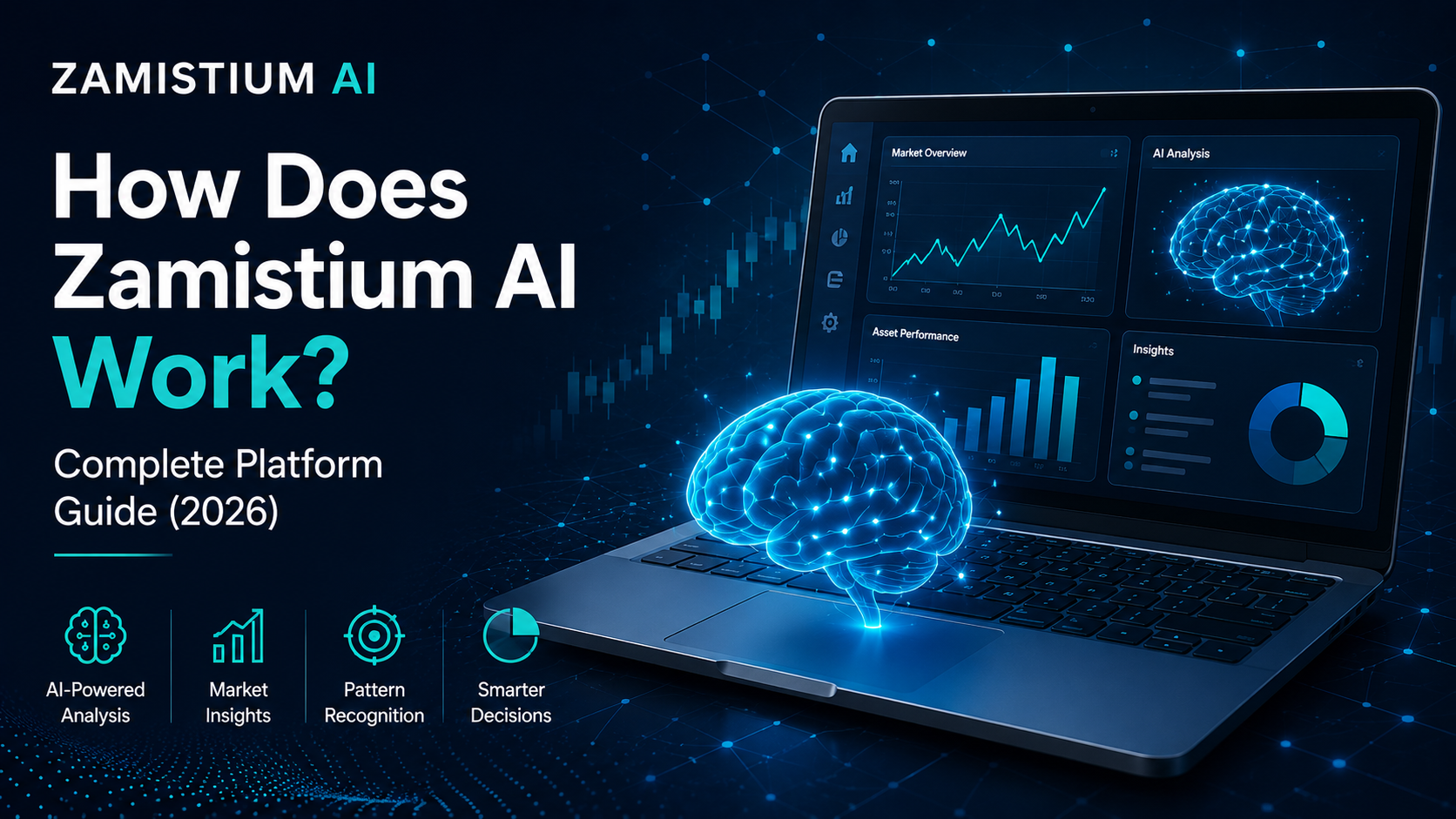
The dashboard is designed to present relevant information in an organized and user-friendly format.
Typical sections may include:
- market overview
- asset categories
- educational materials
- account information
- analytical tools
- platform updates
Clear navigation allows users to locate information without needing advanced technical knowledge.
Step 3: AI Collects Market Information
Artificial intelligence continuously processes large amounts of publicly available financial information.
Instead of relying on a single indicator, AI systems can evaluate multiple data sources simultaneously.
These may include:
- historical market prices
- price movement patterns
- market volatility
- trading activity
- broader economic indicators
- statistical relationships
This process happens much faster than manual analysis.
Step 4: Pattern Recognition
One of the strongest capabilities of artificial intelligence is identifying recurring patterns within large datasets.
Rather than making assumptions, AI compares current market conditions with historical information to identify similarities and potential trends.
Pattern recognition is widely used across finance, healthcare, logistics, and many other industries.
Step 5: Organizing Information
Raw financial data is difficult to interpret.
AI helps organize information into structured formats that users can review more efficiently.
Instead of examining thousands of individual data points, users receive a clearer overview of changing market conditions.
This makes information easier to understand, particularly for beginners.
Step 6: Supporting User Decisions
An important point is that Zamistium AI does not replace personal judgment.
Artificial intelligence assists with organizing information, but investment decisions remain the responsibility of the user.
Responsible investing requires considering:
- financial goals
- personal circumstances
- risk tolerance
- investment horizon
- market conditions
AI serves as a decision-support tool rather than an automatic guarantee of successful outcomes.
Technologies Behind AI Market Analysis
Modern AI platforms generally combine several technologies.
Machine Learning
Machine learning algorithms improve by analyzing large datasets and identifying statistical relationships.
Instead of relying solely on predefined rules, these systems adapt as additional information becomes available.
Data Processing
Financial markets generate enormous quantities of information every second.
AI can process this information continuously without the limitations of manual analysis.
Statistical Modeling
Statistical models help evaluate probabilities, correlations, and historical behaviors across different market environments.
These models support structured analysis but cannot predict future outcomes with certainty.
Automation
Automation enables repetitive analytical tasks to be performed consistently and efficiently.
This allows users to spend more time evaluating insights rather than gathering information manually.
Benefits of AI-Assisted Analysis
AI technology offers several practical advantages.
Faster Information Processing
Large datasets can be analyzed significantly faster than through manual methods.
Continuous Monitoring
AI systems can evaluate market information throughout the day, helping users stay informed about changing conditions.
Organized Insights
Instead of overwhelming users with raw numbers, AI structures information into easier-to-understand formats.
Accessibility
User-friendly interfaces make advanced technology more approachable for individuals who are new to investing.
Common Misunderstandings
“AI predicts the future.”
No.
Artificial intelligence analyzes available information but cannot predict future market movements with certainty.
“AI guarantees profits.”
No.
Every investment carries risk regardless of the technology being used.
“AI replaces investors.”
No.
The platform is designed to support users, not make personal financial decisions on their behalf.
Frequently Asked Questions
Do I need investing experience?
Not necessarily.
Many AI platforms are designed for beginners and include educational resources that explain financial concepts in accessible language.
Does AI work 24/7?
AI systems are capable of processing information continuously, allowing market data to be analyzed more frequently than manual approaches.
Can AI eliminate investment risk?
No.
Technology can improve efficiency and organization, but it cannot remove the uncertainty that exists in financial markets.
Why is AI becoming popular in investing?
Artificial intelligence helps process enormous amounts of financial information quickly, allowing users to access organized insights that would otherwise require significant manual effort.
Final Thoughts
Understanding how Zamistium AI works helps users set realistic expectations before exploring the platform.
Rather than replacing investors, artificial intelligence acts as a sophisticated analytical assistant capable of processing data, recognizing patterns, and organizing information more efficiently than traditional manual methods.
As AI continues to evolve, platforms like Zamistium AI demonstrate how technology can make financial analysis more accessible while reminding users that successful investing still depends on education, careful research, and informed decision-making.